 Eosium Technologies Numériques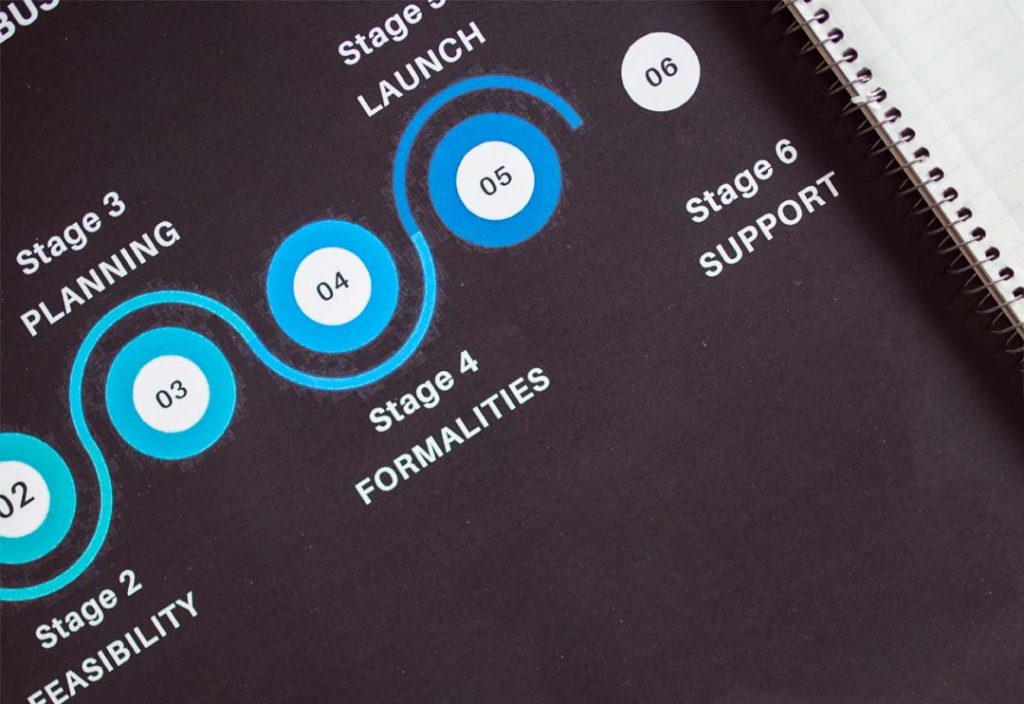
You’ve probably asked yourself this question before: “What software should we buy to modernize?” That’s the wrong place to start. Before choosing a tool, you need to know where your business is wasting time and money, and no software can tell you that until you’ve done the analysis yourself.
Digital transformation for small and medium-sized businesses in Quebec doesn’t start with a technological solution. It starts with an assessment. This is the key difference between projects that deliver results and those that gather dust three months after implementation. In this article, we’ll show you where to start, in practical terms, without getting lost in the jargon.
Why Most Digital Transformation Projects Fail
There is a very human bias behind these failures: the action bias. When we feel like we’re falling behind, our instinct is to act quickly, buy software, launch a project, rather than taking the time to understand the problem.
The numbers confirm this. According to a 2025 report by the Canadian Federation of Independent Business (CFIB), 92% of Canadian SMEs already use digital technologies, but only 10% have fully integrated them across all their operations. Adoption is widespread; execution lags far behind. A 2026 study by the Business Development Bank of Canada (BDC) supports this finding: only 23% of SMEs have a high or very high digital maturity score, while 44% are at a low or very low level. The cost of this gap is not merely theoretical: the BDC estimates that if all Canadian SMEs reached the maturity level of the most advanced companies, the country’s GDP could grow by nearly 14%, or approximately $350 billion.
The reason for this gap is almost always the same. People buy the tool before they understand the problem. But software grafted onto an already chaotic process doesn’t eliminate the chaos; it amplifies it. You end up with a new platform, the same manual tasks being duplicated, and a team that’s even more frustrated than before.
That’s why the digital transformation of SMEs must start somewhere else.
The Real First Step: The Digital Maturity Assessment
Before buying anything, you map things out, but mapping isn’t just about listing functional requirements. A thorough SME digital maturity assessment addresses technical questions (what tools are already in place, often more than you realize, and underutilized; how information actually flows from one stage to the next; where the bottlenecks are; which manual tasks or duplicate data entry are wasting precious time) and equally essential business questions: what are the organization’s real needs, beyond the wish list, and what are the stakeholders’ expectations, so you can address them from the start rather than dealing with disappointment at the end of the project.
This is where the user’s perspective comes into play. A tool can check all the functional boxes and still fail because it wasn’t designed from the perspective of the person who will use it every day. Usability and alignment with the actual operational process, not the process as documented on paper, but as it’s experienced on the ground, determine whether adoption will go smoothly or become an uphill battle.
It is also at this stage, even before choosing a tool, that change management must be prepared. It starts with an impact analysis: who will be affected, how, and to what extent; which roles will change; and what resistance is foreseeable. Too many companies treat change management as a last-minute training session, right before launch. At Eosium, we prepare for it right from the diagnostic phase, in parallel with the technical analysis, because a project whose human impact has been anticipated from day one is far more likely to deliver the expected results.
The resulting deliverable is therefore not a list of generic recommendations, copied and pasted from another client. It’s a prioritized action plan that covers both technical and human aspects, with an estimated return on investment for each initiative. You’ll know exactly what yields the fastest results, what can wait, and what needs to be addressed to make it work. This is the work of a team that has carried out this process dozens of times and knows how to combine technical rigour with a genuine focus on people.
At Eosium, it is this assessment—technical, business, and people-focused—that kicks off every transformation project; it is never the other way around.
Want to know where your small business is wasting time and money? Let's talk about it for 30 minutes—no strings attached.
Where to Start in Practice: A Needs-Based Approach, Not a Tool-Based One
Once you have the assessment in hand, the question is no longer “which software to buy,” but “which category of solution addresses which need and in what order.” There is no one-size-fits-all answer; the right combination depends on what the assessment revealed and on your short-, medium-, and long-term goals.
As the BDC points out, the first step in a successful technology roadmap is not to choose a tool, but to define a clear vision of how digital technology should support your business objectives in the coming years and to ask yourself, in concrete terms, what success would look like in three to five years, before spending a single dollar.
In practice, among the Quebec SMEs we work with, the solution often combines several of the following elements:
Automation of repetitive tasks, when the assessment reveals hours lost each week on manual, low-value-added tasks.
Integration or upgrade of a CRM or ERP system, when the challenge involves double data entry, scattered customer tracking, or a lack of visibility into operations.
Process digitization, when paper and manual approvals slow down everything, from invoicing to onboarding new employees.
Human resources management, when team growth makes managing schedules, payroll, or onboarding unmanageable with spreadsheets and emails.
In many cases, it’s not one or the other, but rather a sequence. First, you address what’s wasting the most time in the short term (often automation or digitization), while preparing for a more structural initiative in the medium term (CRM/ERP, HR), always aligned with where the company wants to be in three to five years.
The guiding principle here remains the same: we don’t replace everything all at once, and we don’t choose a solution just because it’s popular. We prioritize based on your actual needs and business objectives, not on the latest software trend.
How Much Does It Cost and What Funding Is Available?
Budget is almost never the real obstacle; rather, it’s the uncertainty about what you’ll get out of it. Let’s be honest about the numbers: automation focused on one or two processes can be done for a few thousand dollars. A more comprehensive overhaul of your systems obviously represents a larger investment, but it can be planned in stages, not all at once.
The good news is that funding is available to help cover the costs: federal, provincial, and sometimes regional or sector-specific, depending on your profile. The real challenge isn’t the lack of programs, but the fact that they’re constantly changing: some close without notice, others appear, and the criteria and funding amounts are revised from quarter to quarter. A list of grants published today may be partially outdated in six months.
That’s why, rather than pointing you toward program names that may no longer exist by the time you read this, we work with you to verify active options and your eligibility directly during the assessment, and we guide you through the process if a program applies to your project, regardless of which package best fits your situation. We repeat this process for every project, using the most up-to-date information, rather than relying on a static table.
The Decisive Factor: Successful Adoption
Here’s what we too often forget: technology alone isn’t enough. People make all the difference. According to Deloitte, more than 45% of employees actively resist digital transformation initiatives. And this resistance often has nothing to do with the technology itself, which is why the impact analysis conducted during the initial assessment wasn’t just an administrative formality: it’s what makes this stage manageable rather than haphazard.
BDC figures confirm this: SMEs with a formal technology adoption plan report an 85% satisfaction rate, compared to just 66% for those moving forward without a plan. The gap is even more pronounced when it comes to training: 86% satisfaction among SMEs that train their staff, compared to 53% among those that offer no training. In other words, the difference between a project that delivers results and one that disappoints rarely comes down to the technology itself.
It’s pure psychology: loss aversion and the status quo bias. Your employees aren’t resisting a new tool; they’re resisting the loss of their familiar reference points, their tried-and-true methods, and the control they once had over how they work. Ignoring this factor guarantees the failure of even a technically flawless project.
The solution isn’t complicated, but it requires discipline: training tailored to each role, clear and accessible documentation, and a phased rollout rather than an abrupt, overnight change. The adoption of digital tools is achieved step by step, not by decree.
In summary: Assessment first, quick wins second
If you take away just one thing from this article: never start with the software. Begin by understanding where your company is wasting time and money, what your actual needs are, and who will be affected by the change. Only then should you prioritize high-impact initiatives and support your teams with a change management plan that’s in place from day one, not something tacked on at the end of the project. The success of a digital transformation is laid out from the very beginning. That’s exactly what our philosophy says: technology evolves, but human relationships remain.
Want to know where your small business is wasting time and money? Let's talk about it for 30 minutes, no strings attached.
Where should an SME start with digital transformation?
By conducting a digital maturity assessment before making any software purchases. This is what reveals where you’re actually wasting time and money.
What are the steps involved in a digital transformation for an SME?
Map out your current processes, prioritize projects based on their impact, automate quick wins, integrate your existing systems, and then support adoption by your teams.
How much does it cost to digitize an SME in Quebec?
It varies greatly depending on the scope of the project. Targeted automation can be implemented for a few thousand dollars; a more extensive overhaul requires a larger investment but is carried out in phases.
What funding is available for the digital transformation of small and medium-sized businesses in Quebec?
Federal, provincial, and sometimes regional funding is available, but programs change frequently—some are discontinued, while others are created. We work with you to confirm which programs are currently available and your eligibility at the time of diagnosis, rather than relying on a list that may be out of date.
Do you have to replace all your software to go digital?
No. In most cases, it’s better to integrate and make better use of the tools already in place rather than replace everything.
How long will it take to see tangible results?
Simple automations produce measurable results within a few weeks. Larger projects, such as a CRM-ERP integration, take more time, but deliver visible benefits at every stage.